September 2026
Awareness, Fundamentals, Cueing and Bringing What We Learn Into Movement
Twenty years ago, I walked into an Anatomy Through Awareness class — a Feldenkrais class https://feldenkrais.com — with no idea what I was in for.
The teacher barely spoke. We lay on the floor. We rolled around, slowly, with barely any instruction at all. For a long time, that was my definition of somatic: slow, quiet, floor-based, minimally cued. If it wasn’t that, I didn’t think of it as somatic.
It took years of studying and teaching before I understood that what I’d experienced in that room was one entry point into somatic work — not the definition of it. That distinction — entry point, not definition — is what eventually reshaped my own practice and how I sequence a client’s very first sessions with me, before they ever touch a piece of Pilates equipment.
What Somatic Actually Is
At its simplest, somatic refers to the experience of the body from within. In movement, that shifts some of our attention away from Did I do what the teacher asked? What does this movement look like? toward questions like: What am I sensing? What am I recognizing? What am I learning about how I move?
What Somatic Isn’t
It isn’t a style. It isn’t a pace. It isn’t synonymous with gentle.
A movement can be slow without any particular awareness at all — that’s just slow. And movement can be strong, complex, resisted, even fast, while still being experienced with considerable awareness.
So the distinction was never really about the style of movement. It’s about how we’re experiencing it.
That Feldenkrais floor exercise was slow because slow was useful for what we were learning that day — not because slow is what somatic is. I just didn’t have the distinction yet.
Why Do We Slow Things Down?
Sometimes we slow movement down because we’re learning.
When we’re trying to sense something unfamiliar, speed and complexity can make that information harder to recognize. Slowing down gives us a chance to notice where a movement begins, locate a particular part of our skeleton, recognize unnecessary effort, or distinguish the movement of one part of the body from another.
But slow isn’t the goal. It’s one of the tools we use to develop awareness — the sequence underneath it is usually something like: First sense what’s there. Then recognize what it is. Then use it in the movement.
Once that information becomes familiar, the real question becomes whether we can carry that awareness with us as movement gets more complex.
This is where somatic awareness began to change the way I teach Pilates.
Why I Began Teaching A Somatic Movement Approach to Pilates
My interest in a somatic approach grew partly out of my own practice and injuries. As my awareness developed, I began experiencing a greater sense of ease in my own body. I wasn’t just performing movement differently — I was becoming more aware of how I was moving, and more importantly, how my body was responding to movement.
But I also noticed something in my clients. Someone could learn something during a session. They did what I asked them to do. I could see their movement change. Sometimes they could feel the difference. Then they’d leave the studio and return to many of their same familiar patterns in everyday life.
It made me question whether teaching someone to perform an exercise differently was enough. If they couldn’t recognize their own patterns without me standing beside them, how could they make different choices outside the studio?
I wanted what we were learning through Pilates to leave the studio with them. https://www.matworkz.com/about/instructors/
Why Fundamentals Before Pilates Repertoire
There are fundamental movement skills I teach before introducing someone to the Pilates repertoire https://momence.com/l/4ZhBkZK1 . These aren’t warm-ups, and they’re not movements someone needs to keep doing forever. Each fundamental has a purpose. Some help develop a connection; others develop a skill. A connection is more of a feeling state; once it’s there, it tends to carry into the Pilates work fairly quickly. Using the magic circle to establish the hand to powerhouse connection is one example. A skill involves more finesse and technique, and usually takes longer to build. These fundamentals are the building blocks of a somatic movement approach to Pilates.
As the skill develops, we begin integrating it into the repertoire. Once it is integrated, we may no longer need to practice it. If a skill still needs more development, we return to the fundamental. There isn’t a predetermined timetable.
I actually started doing this before I fully understood what I was doing. Early in my career, many clients came to me with all manner of physical issues — there was no way they could go straight into the full Pilates repertoire. So we started with what we called pre-Pilates at the time.
As these clients honed skills and progressed up to the full level of Pilates, I noticed their practice became more efficient and they moved with less strain. But at that point in my teaching, much of their awareness was still coming through me. I was organizing their experience through my cueing. They were learning to respond to me, but they weren’t necessarily learning to recognize those same things for themselves.
“Find Your Tail.” When Fewer Words Mean More.
We use colloquial anatomical language all the time in movement: sit on your sit bones, hinge at your hips, find your tail. But a short cue is only useful if the student understands what it refers to.
When I say tail in my teaching, we’ve already established a shared reference. The student has looked at it, touched it, explored where it is on their own body, and spent time sensing it through fundamental movements.
That takes repetition. At first, it may take quite a few words — and quite a bit of exploration — to establish what eventually becomes a very simple cue. I know this isn’t a popular thing to say, but this is precise work. It’s technical — not just a feeling.
But over time, something changes.
When I say, “Find your tail,” I don’t need to explain everything again. The student has an internal reference for those words. They know what I am referring to, they can sense it in themselves, and eventually they can maintain that awareness while they’re doing Pilates without having to stop and think, Where’s my tail?
This is one of the ways a somatic movement approach can actually lead to fewer, more precise cues — not more cueing.
The goal isn’t for the teacher to continually describe everything the student should be feeling. It’s to help the student develop enough awareness that a few well-chosen words can call up information they already have.
For me, that’s part of the technique of teaching — not how many words I use, but whether those words carry meaning for the person hearing them.
Somatic awareness gives us a shared language. And once that language is established, fewer words can say much more.
Awareness Takes Patience
This kind of learning needs to be repeated. Showing someone a landmark once and naming it doesn’t mean they’ve developed an internal relationship with it. We may need to return to it many times.
People who arrive with pain or a movement problem are often more patient with this process — they have a reason to slow down and investigate. Someone who comes primarily wanting a workout may understandably be more eager to get moving. Either type of client can benefit from the awareness, it’s just presented differently. But developing awareness requires some willingness to be curious rather than rushing to the next exercise. It requires patience from the teacher too — explaining something isn’t the same as someone learning it. Sari Mejia Santos https://romanapilatesinternational.com/our-team/sari-mejia-santo/ taught me as a young teacher not to add anything new until after a clients fifth lesson. Familiarity is part of how understanding gets built.
From Fundamentals to Pilates
This is where I want to be specific about what’s actually happening — not a shift from one kind of somatic work to another, but a fundamental exercise becoming integrated into the Pilates practice itself. The awareness carries through; it’s the exercise that changes.
We may use a fundamental to develop a particular skill. But the objective isn’t to get better at performing the fundamental — it’s to carry what was learned into Pilates. As that awareness integrates, movement can get more complex. We add resistance. Coordination increases. Tempo changes.
The awareness doesn’t disappear just because we’re no longer moving slowly. In fact, that’s the point. A full Teaser, a fast Long Stretch Series, a loaded Jackknife — all of it can carry the same awareness. We may have started slowly, but now, minimal cueing is needed — the student can feel it in their body, without me having to say very much at all.
Does Your Pilates Leave the Studio With You?
Pilates isn’t where I want the integration to end. I’m interested in what happens when someone walks out the studio door.
Can something they’ve learned about their spine influence how they stand? Can awareness developed around their leg sockets show up when they’re walking, playing pickleball, or lifting weights? Can they recognize unnecessary effort while reaching, carrying something, or getting off the floor?
I don’t want someone spending the rest of their life consciously analyzing every bone, muscle or joint. The opposite, really. Through exploration, repetition, and experience, something that initially requires considerable attention can gradually become familiar. Eventually, we don’t have to reach for it anymore. It becomes available without so much conscious effort — simply how we move.
And that’s precisely why it can leave the studio. The awareness was never really about Pilates — it’s about how we move, period. It’s ours, in our body, wherever we take it.
Awareness first. Technique follows. Integration is the goal.
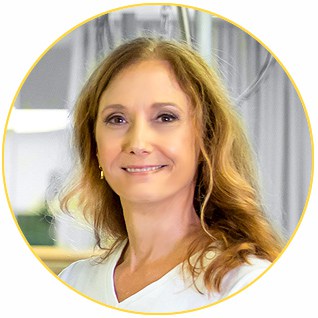
Deborah Watson is the owner and founder of MatWorkz Pilates & GYROTONIC® Studio in Winter Park, Florida. She has been teaching Pilates since 1997, with certificates spanning the GYROTONIC® Expansion System, GYROKINESIS®, Somatic Movement, and Mindfulness Meditation through Dharma Moon and Tibet House US. Her teaching is rooted in Joesph Pilates authentic system as taught by Romana Kryzanowska, deepened by nearly three decades of study, and guided by a simple belief: awareness comes first, technique follows, and integration is the goal.